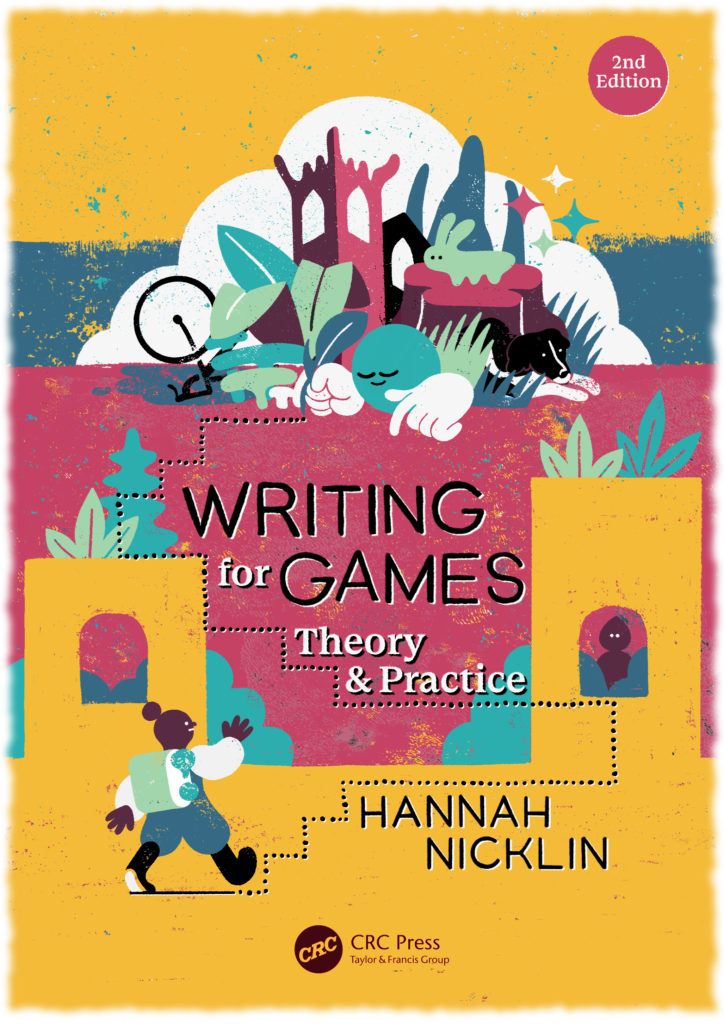
Writing for Games: Theory & Practice
Writing for Games: Theory & Practice is an approachable, entry-level text for anyone interested in the craft of writing for videogames.
The SECOND EDITION of Writing for Games: Theory & Practice will be available for pre-order soon.
About the book
Focusing on the independent videogames sector, the second edition of Writing for Games offers resources for communication, collaboration, reflection, and advocacy, inviting the reader to situate their practice in a centuries-long heritage of storytelling, as well as considering the material affordances of videogames and the practical realities of working in game development processes.
Structured into three parts, Theory considers the craft of both games and writing from a theoretical perspective, covering vocabulary for both game and story practices. Case Studies uses three specific game case studies to explore the theory presented in Part I, alongside seven in-depth interviews with well-known game writers that excavate their craft. The Practical Workbook offers a series of provocations, tools, and exercises that give the reader the means to refine and develop their writing, not just for now but also as part of a lifelong practice.
The updated new edition adds:
- Seven in-depth interviews with practising game writers: Cara Ellison, Charlene Putney, Chella Ramanan, Harry Josephine Giles, Jake Elliott, Kaitlin Tremblay & Matthew Seiji-Burns.
- A substantial new section on the problem of using AI/LLMs in your writing practice
- Brand-new material on writing for and within genre, on how to be a good collaborator, an expanded section on writing for comedy, and a new introduction.
“[…] the perfect bridge for writers from other media into games; at the same time, it also helps game designers and developers understand how writing connects games to other disciplines and guides the reader to how to draw inspiration from them. […] All told with a very personable and approachable tone – a joy to read.”
— Clara Fernandez-Vara, Associate Arts Professor, NYU.“[…] I also especially like how it models for the reader an open-minded, reflective, and exploratory kind of artistic practice, one that’s constantly learning from experiences that might not initially seem at all related to games. […] If you’re a newcomer to this field, or if you’re mentoring newcomers, it’s very much worth a look. And even if you’re not, you will likely find valuable approaches especially in the later chapters of Parts I and III.”
— Emily Short